NFPE là viết tắt của Khám sức khỏe tập trung vào dinh dưỡng . Đây là một phương pháp đánh giá thể chất tại giường bệnh hoặc phòng khám được các chuyên gia dinh dưỡng và các bác sĩ khác sử dụng để tìm kiếm các dấu hiệu suy dinh dưỡng, thiếu hụt chất dinh dưỡng, mất mỡ, teo cơ, giữ nước và mất nước.
Nó kiểm tra những gì
NFPE thường đánh giá:
-
Khối lượng cơ bắp và sự teo cơ.
-
Giảm mỡ dưới da.
-
Tình trạng dịch cơ thể, ví dụ như phù nề.
-
Các dấu hiệu trên tóc, da, móng tay, mắt, miệng và lưỡi có thể cho thấy sự thiếu hụt chất dinh dưỡng.
-
Các dấu hiệu chức năng như sức mạnh hoặc điểm yếu của tay cầm.
Tại sao điều đó lại quan trọng
NFPE giúp xác định xem việc ăn uống kém, bệnh tật hoặc viêm nhiễm có ảnh hưởng đến tình trạng dinh dưỡng hay không, và nó hỗ trợ chẩn đoán suy dinh dưỡng khi được sử dụng cùng với các đánh giá dinh dưỡng khác. Nó thường chi tiết hơn một cuộc khám sức khỏe thông thường vì nó tập trung cụ thể vào các phát hiện liên quan đến dinh dưỡng.
Cách áp dụng trong thực tế
Khám đánh giá dinh dưỡng toàn diện (NFPE) thường là một phần của quá trình đánh giá dinh dưỡng tổng quát hơn, bao gồm cả tiền sử cân nặng, lượng thức ăn tiêu thụ, kết quả xét nghiệm (nếu có) và tiền sử bệnh lý. Trong môi trường bệnh viện, quá trình này có thể toàn diện hơn, trong khi ở phòng khám ngoại trú, nó có thể là một cuộc khám ngắn gọn và tập trung hơn.
Ví dụ đơn giản
Ví dụ, nếu bệnh nhân bị sụt cân không chủ ý và giảm lượng thức ăn nạp vào, bác sĩ lâm sàng có thể tìm kiếm các dấu hiệu như teo cơ thái dương, hõm quanh mắt, xương sườn lộ rõ hoặc phù mắt cá chân như một phần của quá trình khám lâm sàng không do thiếu vitamin D (NFPE).
🌱 That’s the power of a Nutrition-Focused Physical Examination (NFPE).
🩺 🔍It’s lens of insight.
Nutrition-Focused Physical Examination (NFPE) is one of the most powerful tools in clinical nutrition—because it allows us to see nutrition beyond numbers.
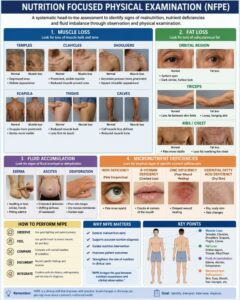
👩⚕️ 👣 It is systematic head -to-toe assessment to identify early signs of malnutrition, nutrient deficiencies, fluid imbalance, and muscle/fat loss.
It combines:
🔹️Clinical observation
🔹️Physical examination skills
🔹️Nutrition assessment data
Why NFPE Matters:
➡️ Detects malnutrition early
➡️ Supports accurate nutrition diagnosis
➡️ Improves clinical outcomes
➡️ Helps create individualized nutrition
interventions
➡️ Strengthens the role of nutrition in
clinical care
Before lab reports, before imaging, before biochemical confirmation—the body already reflects nutritional status.
From “tip to toe,” the body quietly tells a story even before laboratory values and reports confirm it. From hair thinning to muscle wasting, from skin changes to oral signs—NFPE helps us read the “silent language” of nutrition status
🌟 Key areas to observe:
1. Muscle stores 💪 (wasting or loss)
Temples, clavicle, shoulders, scapula, intercostals, thighs, calves – Helps identify protein-energy malnutrition and sarcopenia
2. Fat stores 🟡(subcutaneous depletion)
Orbital fat pads, triceps, chest, abdomen
– Reflects energy deficit and chronic undernutrition
3. Hair and scalp👱
Texture, thinning, brittleness, depigmentation – May indicate micronutrient deficiencies (protein, zinc, iron)
4. Skin ✨️🙎♀️
Dryness, cracks, pigmentation changes, poor wound healing – Can signal vitamin/mineral deficiencies or protein deficiency
5. Eyes 👀
Pale conjunctiva, Bitot spots, dryness – Suggests iron deficiency anemia or vitamin A deficiency
6. Oral cavity 👅
Tongue changes, angular cheilitis, gum health, dentition – Often reflects B-vitamin deficiencies and poor intake
7. Nails 🖐
Brittleness, spooning (koilonychia), ridging – Common in iron and protein deficiencies
8. Edema and fluid status 🦵💧
Lower limb swelling, sacral edema – May mask weight loss and indicate hypoalbuminemia or inflammation
Its significance lies in timing and accuracy.
It enables early identification of malnutrition, guides timely intervention, and supports more precise nutrition diagnosis and care planning. It also helps track response to therapy in a real, visual, patient-centered way.
Because sometimes, the most important findings are not in the reports…they are in the patient in front of us. 🌿
See what the body is quietly saying.
— Swetha | Clinical Dietitian
#NFPE #ClinicalNutrition #DietitianPractice #RegisteredDietitian #Evidencebasedpractice
#PatientCentriccare #NutritionCareProcess
NFPE, Dinh dưỡng Lâm sàng, Thực hành Dinh dưỡng, Chuyên viên Dinh dưỡng Đăng ký, Thực hành Dựa trên Bằng chứng, Chăm sóc Bệnh nhân Tập trung, Quy trình Chăm sóc Dinh dưỡng
(St.)
Ý kiến bạn đọc (0)